

How to Care for Your Everthine Jewelry

Fine jewelry is meant to be worn, loved, and lived in. The pieces we collect over time often mark important moments—celebrations, milestones, and the everyday stories that become part of our lives. With a little thoughtful care, your jewelry can last for generations.
Wear it well. Care for it well.
Here are a few simple ways to keep your fine jewelry looking beautiful for years to come.
Take Jewelry Off During Hands-On Activities
Fine jewelry is durable, but it isn’t indestructible. Activities like gardening, exercising, cleaning, or lifting heavy objects can place unnecessary stress on stones and settings. Removing your rings and bracelets during these moments helps prevent scratches, bent prongs, and loose stones.
Be Mindful of Harsh Chemicals
Household cleaners, bleach, pool chlorine, and hot tub chemicals can be especially damaging to fine jewelry. These harsh chemicals can slowly corrode precious metals, weakening their structure over time. When metal becomes compromised, it can lead to cracking, worn prongs, or stones that no longer sit securely in their settings. It's always best to remove your jewelry before swimming, soaking in a hot tub, or working with strong cleaning products.
Last On, First Off
A simple rule of thumb: jewelry should be the last thing you put on when getting ready and the first thing you take off at the end of the day. Lotions, perfumes, and hair products can build up on metals and gemstones, dulling their natural brilliance over time.
Store Pieces Separately
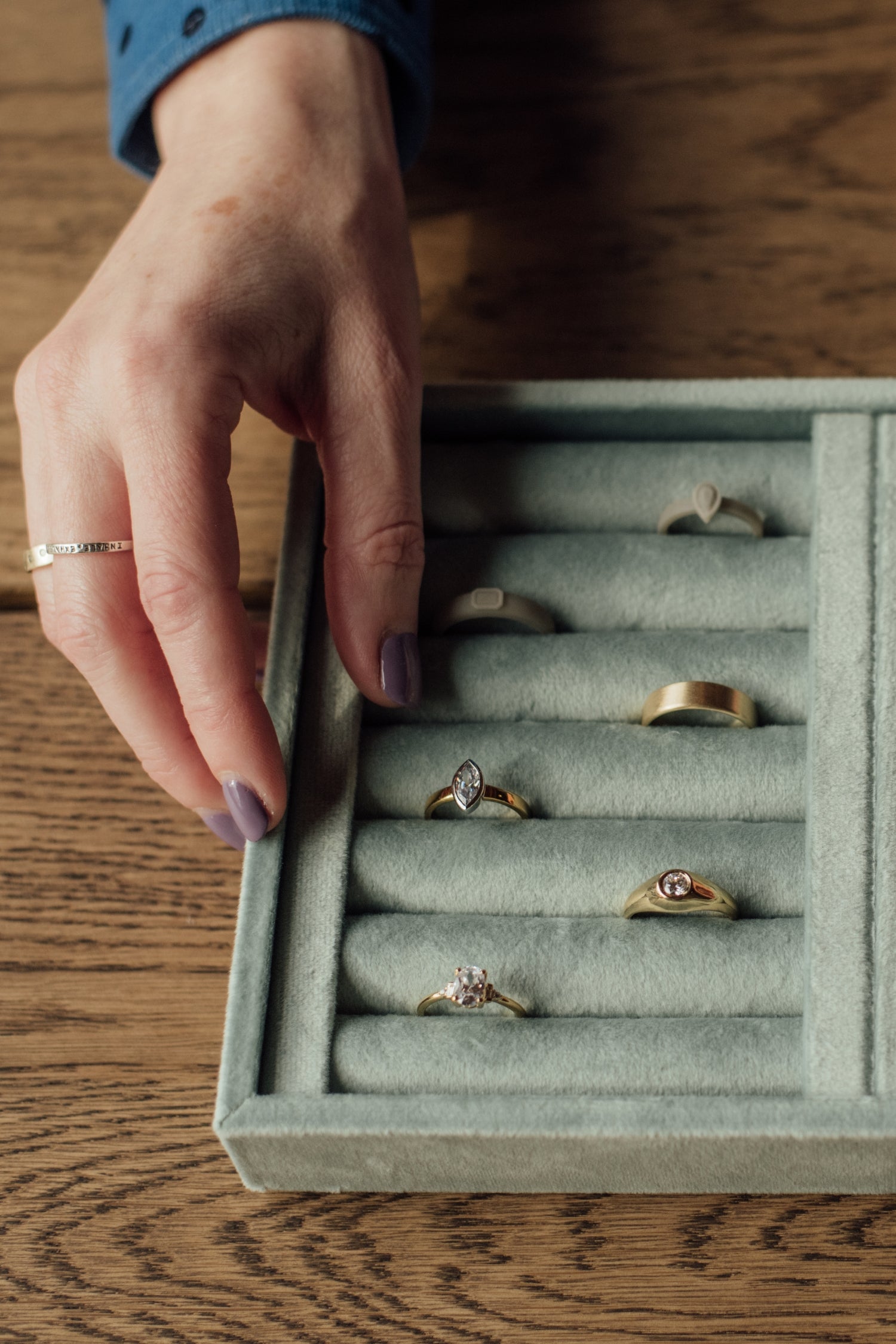
When jewelry is tossed together in a box or drawer, pieces can scratch or tangle with one another. Storing items separately in soft pouches or a lined jewelry box helps protect delicate surfaces and keeps chains from knotting.
Clean Jewelry Gently
Most fine jewelry can be refreshed with warm water, mild dish soap, and a soft toothbrush. A gentle scrub followed by a rinse and soft cloth dry will restore much of its natural sparkle. Avoid harsh chemicals, which can damage both metal and gemstones.
Schedule Regular Check-Ups
Just like anything you treasure, jewelry benefits from a little maintenance. Having your pieces professionally cleaned and inspected once a year ensures that prongs are secure, stones are tight, and everything is in its best condition.
Fine jewelry is designed to last a lifetime—and often longer. With a bit of care and attention, the pieces you wear today will continue to tell their stories for years to come.
Continue reading